Automotive Production Intelligence: How Connected Shopfloors Improve Manufacturing Visibility
Learn how automotive production intelligence and connected shopfloors enhance real-time visibility, OEE tracking, predictive maintenance, and quality control.
Dalnex Team
Automotive & Discrete Manufacturing Systems Engineers
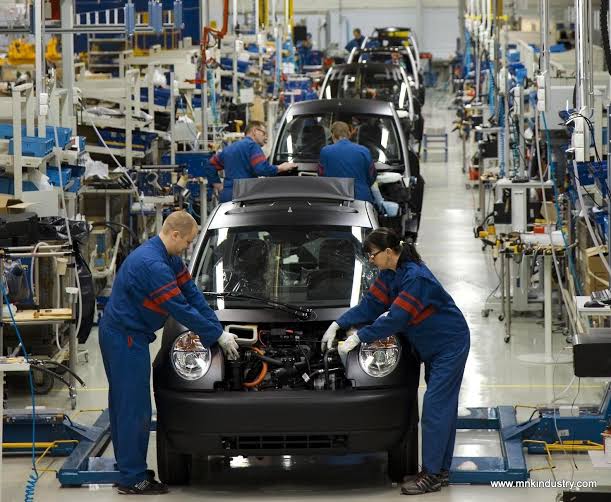
The automotive manufacturing sector is characterized by immense precision, tight tolerances, and unforgiving delivery schedules. With thousands of parts converging across stamping, welding, paint, and final assembly lines, even brief disruptions can trigger massive cost ripples across the supply chain.
Modern automotive original equipment manufacturers (OEMs) and Tier-1/Tier-2 suppliers can no longer afford to manage production through end-of-shift reports or disjointed manual spreadsheets.
This is where Automotive Production Intelligence transforms the shopfloor.
By connecting machinery, robotic cells, assembly lines, and inspection stations into a unified intelligence ecosystem, connected shopfloors turn raw operational data into real-time visibility, faster problem resolution, and continuous OEE improvement.
What Is Automotive Production Intelligence?
Automotive Production Intelligence is the systematic application of Industrial IoT (IIoT), automated machine telemetry, edge computing, and real-time operational analytics across automotive manufacturing plants. Instead of treating equipment as isolated islands, production intelligence links stamping presses, CNC machines, robotic welding bays, paint booths, and assembly lines into a continuous stream of live performance metrics.
- Is the line maintaining its planned takt time?
- Which workstations are experiencing micro-stops or starvation?
- Where are cycle times drifting beyond engineering limits?
- What is the root cause of quality defects on the current production run?
The Hidden Visibility Bottlenecks in Automotive Plants
Despite high levels of automation, automotive shopfloors frequently suffer from critical visibility gaps that drain plant capacity:
- Unrecorded Micro-Stoppages: Short halts (15–60 seconds) caused by part misfeeds or sensor glitches rarely appear on operator paper logs, yet cumulatively rob plants of 10–18% of daily capacity.
- Lagging Downtime Attribution: Traditional maintenance logs record machine breakdown after the line stops, losing valuable hours in diagnosis before repairs begin.
- Cycle Time Drift: Tooling wear, hydraulic pressure drops, or slight robotic path deviations lengthen cycle times imperceptibly without triggering immediate alarms.
- Fragmented Quality Feedback: Scrap and defect counts are tallied at the end of the shift or during off-line quality audits, by which time hundreds of non-conforming parts may have been produced.
- Complex Traceability Requirements: Stricter OEM compliance mandates require end-to-end component genealogy, tying torque curves, weld parameters, and inspection images to serial numbers.
How Connected Shopfloors Deliver Complete Manufacturing Visibility
Connected shopfloors bridge the gap between physical machinery and decision-makers through five foundational pillars:
Real-Time Takt Time & Line Balancing
Sensor and PLC gateways monitor the exact pacing of each station relative to scheduled takt time, alerting team leaders before an imbalance stalls downstream cells.
Automated OEE & Downtime Classification
Eliminates manual tally sheets by streaming live Availability, Performance, and Quality metrics. Downtime events are automatically captured and categorized (mechanical, electrical, tooling, starvation, blockage).
Condition-Based & Predictive Maintenance
Edge sensors monitor vibration signatures, thermal patterns, motor current, and hydraulic pressures on critical assets—such as stamping presses and transfer robots—preventing catastrophic unexpected failures.
In-Line Quality Assurance & AI Vision
High-speed machine vision systems inspect weld beads, fastener presence, surface finishes, and dimensional tolerances at full line speed, rejecting defects before value is added.
Digital Genealogy & Serialization Traceability
Captures key process parameters for every component and VIN, establishing an unbroken audit trail that protects against wide-scale recalls.
Traditional Automotive Shopfloors vs. Connected Production Intelligence
Upgrading from manual production management to an automated, connected intelligence platform fundamentally shifts operational responsiveness.
| Operational Capability | Traditional Automotive Shopfloor | Connected Production Intelligence |
|---|---|---|
| Data Capture | Manual operator sheets & end-of-shift tallies | Sub-second automated PLC & IoT telemetry |
| Micro-Stop Tracking | Invisible and unrecorded | 100% captured with automated duration logging |
| Downtime Response | Reactive after line alarms sound | Predictive alerts & instant digital Andon escalation |
| OEE Measurement | Calculated retrospectively on spreadsheets | Live dynamic OEE per line, shift, and station |
| Quality Inspection | Off-line batch audits & manual checks | In-line AI vision inspection with closed-loop feedback |
| Component Traceability | Sampled paper logs & disconnected files | Complete digital genealogy linked to VIN / barcode |
Key Metrics Monitored in Automotive Production Intelligence
A modern automotive production intelligence platform tracks and visualizes critical manufacturing indicators in real time:
- Overall Equipment Effectiveness (OEE) and Overall Operations Effectiveness (OOE)
- Takt Time vs. Actual Cycle Time per station
- Mean Time Between Failures (MTBF) and Mean Time to Repair (MTTR)
- First-Time Right (FTR) and Scrap Rate by defect category
- Line Starvation and Blockage Durations
- Tool and Die Life Tracking with refurbishment alerts
Deploying Connected Shopfloors: A Practical Roadmap
Successful digital transformation across automotive plants follows a phased, low-risk implementation methodology:
Non-Invasive Edge Connectivity
Deploy industrial edge gateways to interface with existing PLCs (Siemens S7, Allen-Bradley, Fanuc, Omron) and legacy machines without disrupting validated production lines.
Standardize Shopfloor Protocols
Normalize diverse data streams using modern industrial protocols such as MQTT, OPC UA, and REST APIs.
Centralize Plant-Wide Visibility
Implement live digital Andon boards and supervisor tablets so production status is instantly apparent across every bay.
Implement Root-Cause Loss Analytics
Analyze Pareto charts of downtime reasons and micro-stops to target continuous improvement (Kaizen) projects where ROI is highest.
Integrate with Plant MES & ERP
Connect real-time production output to enterprise systems for accurate inventory replenishment and just-in-time order dispatch.
Gain complete visibility across your automotive shopfloor. Dalnex FactOS empowers automotive manufacturers with automated OEE tracking, live micro-stop detection, and predictive maintenance to maximize line throughput.
Frequently Asked Questions
Experience Dalnex Smart Manufacturing
Connect your machines, eliminate blind spots, and achieve measurable OEE improvements in as little as 30 days with FactOS & VisionOS.
Related Manufacturing Guides
Industry 5.0 Explained: What Comes After the Smart Factory?
Discover how human-centricity, sustainability, resilience, AI and smart manufacturing are shaping the next generation of factories.
Read Guide FactOSPlastic Manufacturing: How Real-Time Monitoring Makes Injection Molding Smarter
Discover how real-time production monitoring helps plastic manufacturers optimize cycle times, reduce scrap, monitor machine performance, and improve OEE in injection molding.
Read Guide FactOSWhat is a Factory Operating System? Meet FactOS by Dalnex – The Complete Guide for Smart Manufacturers (2026)
Discover how a modern Factory Operating System connects machines, people, and processes to boost OEE and eliminate shopfloor downtime.
Read Guide