Industry 5.0 Explained: What Comes After the Smart Factory?
Discover how human-centricity, sustainability, resilience, AI and smart manufacturing are shaping the next generation of factories.
Dalnex Team
Industrial IoT & Smart Manufacturing Pioneers
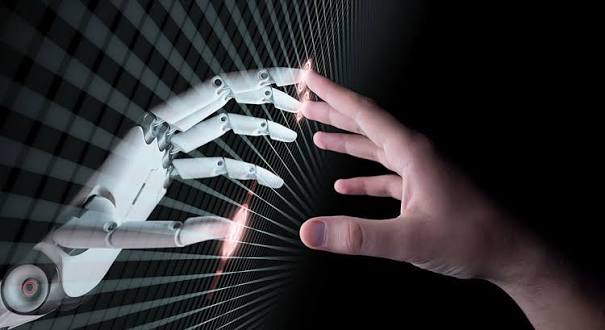
Factories are becoming smarter.
Machines are connected. Sensors generate data. Production dashboards provide real-time visibility. Artificial intelligence is entering manufacturing. Robots are working alongside people.
This transformation is commonly associated with Industry 4.0.
But what happens when simply making factories more connected and automated is no longer enough?
That question is at the heart of Industry 5.0.
Industry 5.0 introduces a broader way of thinking about manufacturing. Instead of focusing only on productivity, automation and technological efficiency, it places greater emphasis on people, sustainability and resilience.
So, is Industry 5.0 simply the next version of Industry 4.0? Not exactly. And that is what makes it interesting.
What Is Industry 5.0?
Industry 5.0 is a vision for manufacturing where technology is designed not only to improve industrial performance, but also to create manufacturing systems that are:
- More human-centric
- More sustainable
- More resilient
- More adaptable
- More intelligent
Industry 4.0 focuses heavily on connectivity, automation, data and digitalisation. Industry 5.0 asks a bigger question: What should all this technology ultimately achieve?
The answer goes beyond producing more products faster. It includes creating better workplaces, using resources more responsibly and making factories more capable of adapting to disruptions.
The Three Pillars of Industry 5.0
Industry 5.0 rests on three fundamental pillars that redefine modern industrial strategy:
1. Human-Centric Manufacturing
One of the biggest changes in thinking is the role of people. Automation has traditionally been associated with reducing manual intervention. Industry 5.0 takes a different approach. The objective is to use technology to support and empower workers, improving human-machine interaction rather than treating automation simply as a replacement for people.
- Which machines are underperforming
- Where production is falling behind
- Which downtime reasons are increasing
- Which processes require attention
Imagine a production supervisor who no longer has to manually collect production numbers from every machine. Instead, the system automatically collects the data and highlights where attention is required. The technology handles the repetitive information-gathering work; the human makes the decision. That is a very different relationship between people and technology.
2. Sustainable Manufacturing
Industry 5.0 also expands the definition of manufacturing efficiency. A factory may produce more output while still consuming excessive energy, generating unnecessary scrap or wasting raw materials. Industry 5.0 asks manufacturers to consider the environmental impact of production alongside productivity. This can involve:
- Energy monitoring
- Resource optimisation
- Waste reduction
- Better material utilisation
- Circular manufacturing
- Sustainable production processes
Digital technologies contribute directly by giving manufacturers granular visibility into how energy and raw materials are consumed on the shopfloor.
3. Resilient Manufacturing
Modern factories operate in an environment of uncertainty. Supply-chain disruptions, raw-material shortages, equipment failures, workforce changes and unexpected market conditions can affect production. A resilient factory needs more than automation—it needs visibility and adaptability. Real-time production data helps manufacturers understand what is happening across the factory and respond faster when conditions change. Industry 5.0 therefore connects digital transformation with the ability to withstand and adapt to disruptions.
Industry 4.0 vs Industry 5.0
The difference is not simply Industry 4.0 → Industry 5.0. It is better understood as an expansion of priorities.
| Dimension | Industry 4.0 Focus | Industry 5.0 Expansion |
|---|---|---|
| Core Connectivity | Connectivity & machine networks | Human-centric technology & UX |
| Automation Philosophy | Automation & unmanned lines | Human-machine collaboration & cobots |
| Decision Making | Data-driven automated decisions | Human + data-driven augmented decisions |
| Productivity Focus | Output volume & machine speed | Productivity combined with worker wellbeing |
| Transformation Scope | Digital transformation | Digital + sustainable transformation |
| Factory Paradigm | Smart factories | Human-centric smart factories |
| Operational Goal | Process efficiency | Efficiency combined with operational resilience |
| Cognitive Layer | Machine intelligence & algorithms | Human and machine intelligence synergy |
Industry 5.0 builds on many technologies associated with Industry 4.0 rather than abandoning them.
What Technologies Enable Industry 5.0?
Industry 5.0 does not depend on one specific technology. Instead, several technologies contribute to this transformation:
Industrial IoT (IIoT)
Connected machines and edge sensors provide real-time information about manufacturing operations, cycle times, and operational health.
Artificial Intelligence & Analytics
AI analyses large volumes of manufacturing telemetry to identify patterns, anomalies, and potential equipment failures before they manifest.
Machine Vision
Vision systems automate high-speed inspection and quality-related tasks while providing consistent, fatigue-free production feedback.
Collaborative Robotics (Cobots)
Robots and cobots perform repetitive, ergonomic, or physically demanding operations alongside human operators in shared workspaces.
Digital Twins
Digital representations of machines and lines help engineers simulate scenarios, analyze bottlenecks, and optimize plant layouts.
Edge Computing
Processing data close to the machines supports sub-second responses, offline buffering, and deterministic shopfloor control.
Does Industry 5.0 Mean More Automation?
Not necessarily. This is one of the most interesting parts of Industry 5.0. The goal is not simply: More automation = better factory. Instead, the question becomes: How can technology make humans more capable?
- A production operator with access to real-time machine information can identify issues faster.
- A maintenance engineer with historical machine data can investigate recurring failures more effectively.
- A plant manager with live production visibility can make decisions based on current conditions rather than yesterday's report.
Technology becomes an intelligence layer around people, augmenting human intuition with exact physical evidence.
What Would an Industry 5.0 Factory Look Like?
Imagine entering a factory where:
- Machines continuously generate operational data.
- The data is collected automatically without manual paperwork.
- Production performance is visible in real time across the shopfloor.
- Quality systems identify defects at full line speeds.
- AI detects unusual vibrational or thermal patterns early.
- Energy consumption is monitored per machine and product SKU.
- Operators receive contextual information tailored to their specific workstations.
- Maintenance teams receive proactive condition warnings.
- Managers view overall plant health from a single digital environment.
And instead of replacing human decision-making, technology helps people make better, faster, and more informed decisions. That is the Industry 5.0 reality.
Is Industry 5.0 Already Here?
Parts of it are. Manufacturers are already implementing technologies associated with connected and intelligent factories. However, Industry 5.0 is broader than deploying another dashboard, robot or AI model. It requires manufacturers to balance: People + Technology + Sustainability + Resilience.
The Bigger Question: What Is the Factory of the Future For?
This may be the most important question Industry 5.0 asks. The goal of industrial progress cannot be technological capability alone. The real objective is building manufacturing ecosystems that are productive, adaptable, sustainable and designed to empower the people working within them. As digital technologies continue to evolve, the factories that succeed will not just be the ones with the most automation. They will be the ones that connect technology, sustainability and human capability most effectively.
At Dalnex, we believe the future of manufacturing lies in combining intelligent shopfloor visibility with human decision-making. FactOS empowers teams with real-time operational data, automated OEE tracking, and predictive insights to build resilient, human-centric production environments.
Frequently Asked Questions
Experience Dalnex Smart Manufacturing
Connect your machines, eliminate blind spots, and achieve measurable OEE improvements in as little as 30 days with FactOS & VisionOS.
Related Manufacturing Guides
Automotive Production Intelligence: How Connected Shopfloors Improve Manufacturing Visibility
Learn how automotive production intelligence and connected shopfloors enhance real-time visibility, OEE tracking, predictive maintenance, and quality control.
Read Guide FactOSPlastic Manufacturing: How Real-Time Monitoring Makes Injection Molding Smarter
Discover how real-time production monitoring helps plastic manufacturers optimize cycle times, reduce scrap, monitor machine performance, and improve OEE in injection molding.
Read Guide FactOSWhat is a Factory Operating System? Meet FactOS by Dalnex – The Complete Guide for Smart Manufacturers (2026)
Discover how a modern Factory Operating System connects machines, people, and processes to boost OEE and eliminate shopfloor downtime.
Read Guide